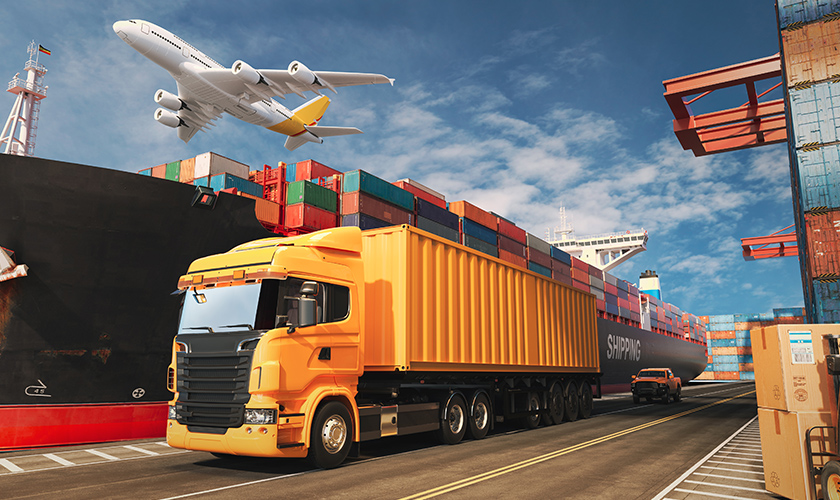
Throughout history, maritime transport has been a vital element of trade and cross-cultural interaction. Today, it serves as the lifeblood of international commerce. Maritime transport encompasses the movement of goods and passengers across oceans, seas, and other navigable waterways.
One of its primary advantages is the vast capacity to carry high volumes of cargo. Container ships and bulk carriers can transport tons of goods from one destination to another, enabling large-scale commercial operations. Furthermore, sea freight represents a cost-effective option, as shipping cargo by sea is considerably more economical than transporting equivalent volumes by road or air.
Maritime transport contributes significantly to the growth of the global economy. It facilitates the worldwide distribution of goods across diverse sectors, including manufacturing, consumer goods, energy products, and foodstuffs. This allows for efficient supply chain management and the delivery of varied commodities to global consumer markets.
Nevertheless, maritime shipping faces specific environmental considerations. Fuel consumption and carbon emissions, particularly from legacy vessels, present ecological challenges. Consequently, developing sustainable maritime transport solutions is essential to enhancing the industry's environmental performance.
Maritime transport is also fundamentally critical from a logistics standpoint. Ports serve as central hubs for maritime traffic, strategically situated at the crossroads of major trade routes. They play a crucial role in regulating, warehousing, and routing flows of cargo and passengers. Moreover, maritime logistics integrates seamlessly with road and rail freight to enable effective multimodal transport operations.
Sea freight is a key driver strengthening international relations and global trade. International maritime treaties and regulatory frameworks help ensure that cross-border trade operates in an orderly, standardized, and equitable manner. Maritime transport fosters cross-cultural interaction and underpins the development of interconnected global economic networks.
In conclusion, maritime transport remains one of the cornerstones of global trade. It offers substantial advantages, such as facilitating high-capacity cargo movement, sustaining economic growth, and reinforcing global connectivity. However, taking environmental impacts and sustainability criteria into account, it is critical that future sector developments remain rigorously focused on sustainable practices.